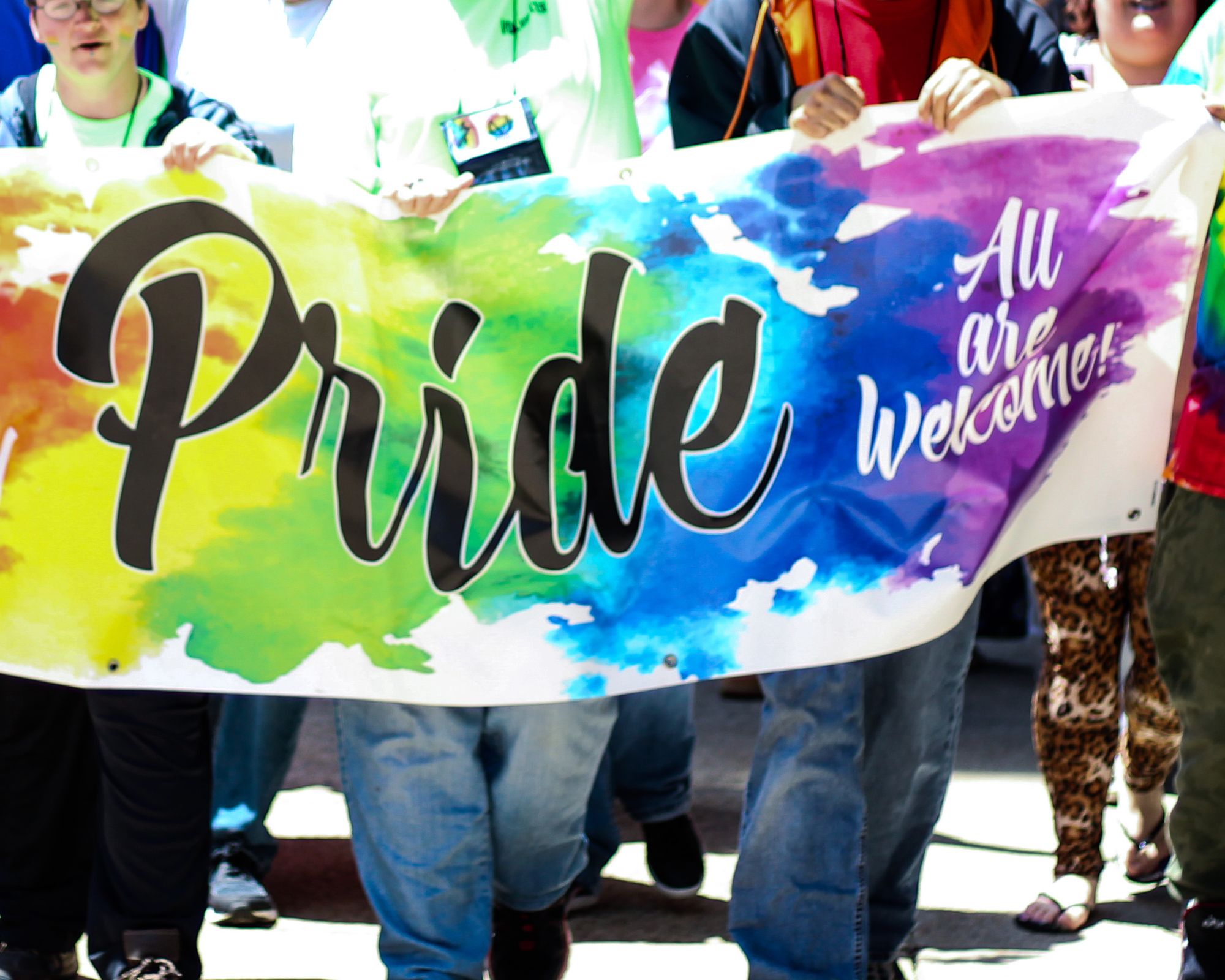
I’m not very comfortable with Pride.
Is it because I’m an autistic introvert who finds parades and bright colors nausea-inducing?
I mean, yeah. But it’s also because I don’t feel “proud” of my sexuality or disability status—not in the way we typically use the word “pride,” at least.
I’m proud of things I achieve. I’m proud when I write a great chapter ending. I’m proud when I actually get the dishes done—all of them, at once, no stray fork left in the sink, no glass lurking on someone’s nightstand. But being queer isn’t an achievement. Disability doesn’t instill in me a great sense of accomplishment. So why Pride?
Damned, Dangerous, or Dead
Recent posts from a prominent Kidlit author have been recirculating this month, accusing asexual people of not having a real queer identity. I won’t repost what Joanne said because it is deeply hurtful (as are the follow up comments from others chiming in to hate on ace people) but let me clear up a few misconceptions.
First, “asexual” does not mean you don’t want to have sex. Some asexual people may not, but the term itself refers — like most sexual identities — to how or under what circumstances you experience sexual or romantic attraction. Although the ace/aro community is broad and diverse, the common thread is that we don’t experience sexual and/or romantic attraction the way that the majority of the population does — the way it says we’re supposed to in the puberty health textbook.
And let me tell you from personal experience, realizing as a teenager that you don’t experience attraction in the way everyone else seems to is alienating. I thought I was broken. Adding some additional adolescent angst, realizing that I liked girls was frankly terrifying. Same-sex marriage was illegal, and my church was loud in its opposition to gay people being allowed to adopt children. The organist at my church was fired when it people found out he was gay, and he had no legal recourse to get his job back. A gay teacher at my school wasn’t allowed in the room when we learned about puberty and had to sleep in his car on overnight field trips. My parents’ gay friends died of AIDS. Nowhere did I see role models of queer women living the life I wanted: marriage, kids, a good job with accepting coworkers. In fact, it seemed like all that gay adults could be was damned, dangerous, or dead.
Meanwhile, people with mental illnesses were shamed, blamed, and discouraged from seeking treatment. Disabled people were discussed as tragedies and burdens. Pain seemed like something that had to be swallowed, ignored, and pretended away. Any social or cognitive differences were a source of embarrassment, and also that little bit of fear. If I can’t “fit in,” will I be able to succeed in this world?
Finding the opposite of shame
In Sunday school, I learned that the opposite of “pride” is “humility,” a virtue. But “shame” is also an opposite of pride, and shame about who you are — aspects of your identity like queerness or disability that are intrinsically part of you and out of your control — is far from virtuous.
I have lots and lots of privilege within my marginalized identities. My disabilities are all invisible, and I’m straight-passing. This means that I’m in less physical danger living my daily life than many other queer people. This means that reversals in queer rights protections are less likely to affect me than many other queer people.
But privilege is relative. I am always aware that if when I admit to my queerness, some people will view me as dangerous, especially to children. Aware through years of personal experience that people (especially straight men) will try to convince me that my asexuality is actually repression, sometimes by physical means. Aware that the safest way to navigate the world is by stuffing my identity down and pretending to be someone I’m not.
(Yes, Joanne, this is a form of oppression.)
The opposite of this kind of shame and fear is capital P “Pride.” I’m still not a parade person, but I have publicly embraced my identity as a queer, disabled person the best way I know how: through writing. At my first ever book signing at Children’s Institute 2025, the number of booksellers who came through my line telling me they wished they’d had this book as a child to help them feel less broken and less alone stirred genuine humility — and Pride, a sense of connection with people who belonged to the same community as me, all of us figuring out together how to move past the shame into self-acceptance, sometimes by way of a YA novel.
This is why Pride matters
Discrimination still exists for queer and disabled people all over the United States and the world. Queer teens are being disowned by parents and left homeless. Disabled kids experience abuse from adults who don’t understand them. But the visibility that comes from Pride celebrations provides a brief respite from the weight of those realities, and I know from experience that visibility is transformative.
My neighbor is a Christian pastor who flies a Pride flag in front of his house so his congregation knows they are welcome. My publisher Candlewick (and many other publishers, too!) had Pride displays of queer books at the American Library Association Conference this weekend, even though queer books are being censored, and revenue on censored books has fallen dramatically. In July, libraries will put out displays of books with great disability representation so their disabled patrons can see their experiences on the page. Pride parades on the news give people who are frightened and beaten down a glimpse of joy and community in spite of it all — a hope to hang onto.
There are so many more visible queer and disabled people than there were when I was a child, living the kind of lives I wish I could have witnessed as a younger me. We are your neighbors, your church members, your teachers, your friends, and your family. We can’t change who we are—and we shouldn’t be expected to want to. And those of us with the privilege to feel safe doing so publicly want to let the members of our communities who are existing in secret and suffering that we’re out here.
You are not alone.
You don’t need to be ashamed, even if you need to hide.
There are people fighting for you, and we’re not going to stop.
This is Pride.