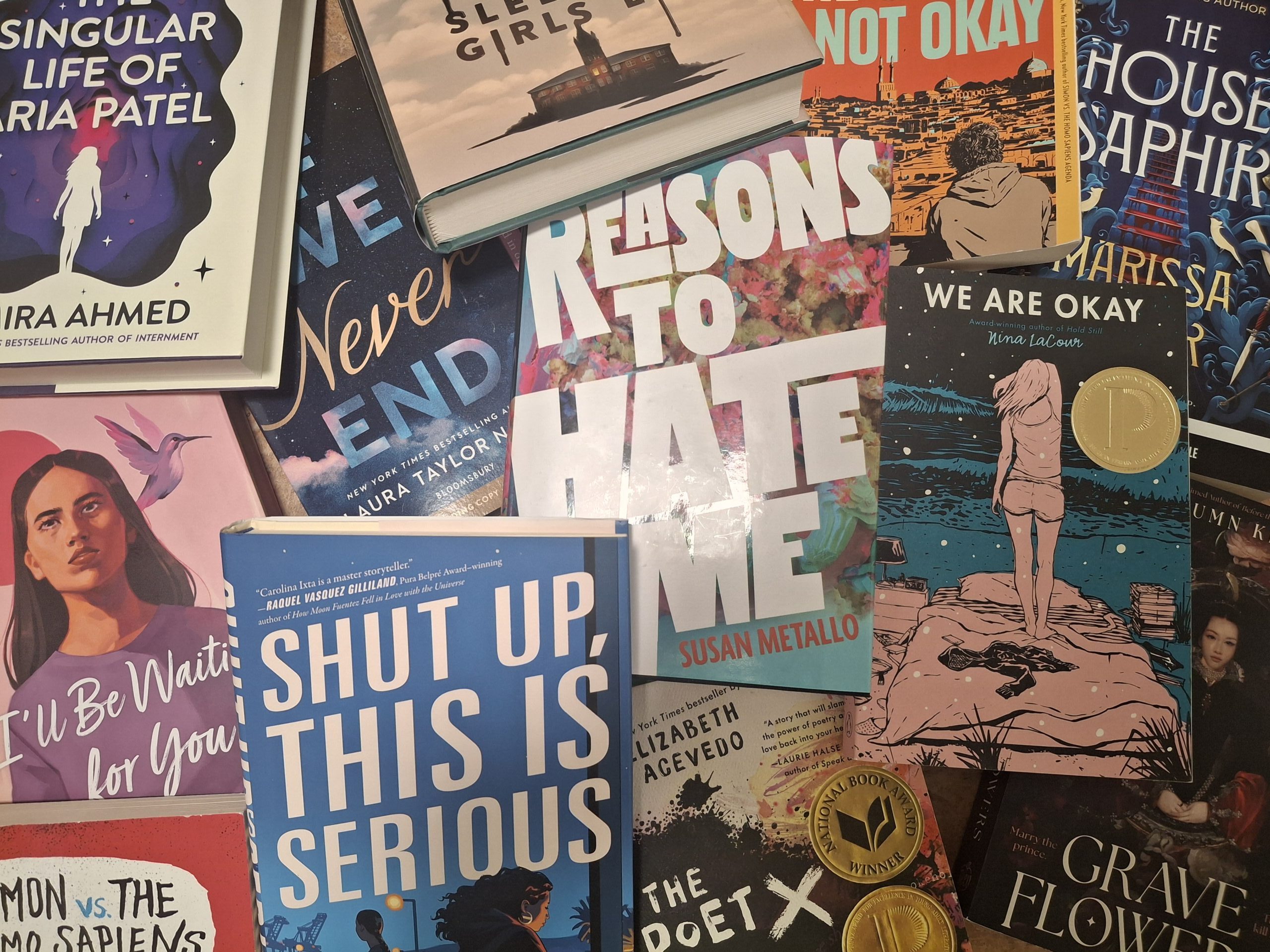
When I was a teen, I would hole up in my bedroom closet every night with a stack of library books. (The checkout limit was 75, so I was well stocked.) I mostly read to escape, so my list was heavy on fantasy and historical fiction. I especially loved stories where characters put on a mask and pretended to be someone they weren’t, although it wasn’t until years later that I figured out why. All I knew as a kid: once a book sunk its teeth into me, it wouldn’t let me go without a fight.
What was I escaping when I rode through Tortall with Alanna the Lioness or climbed the Seahawk’s rigging alongside Charlotte Doyle? I was fleeing from bullies at school. I was fleeing from my own confusion about who I was (undiagnosed neurodivergent and queer in ways that I didn’t have the words for yet). I was fleeing from feelings of brokenness and isolation, leaving a world where I felt like I was the only person like me and finding solidarity with a character who was navigating a world as the only person like her.
As a teen, I didn’t recognize the subconscious connections and psychological work that happened while I read. Now, as an adult, a librarian, and an author, I spend intentional time and brain space on this phenomenon. . . . Keep reading on SLJ.com →
This is an excerpt of a guest post for School Library Journal’s Teen Librarian Toolbox, published on September 5, 2025.